IQupid
Background
When I started at OkCupid in 2019, our Cheif Product Officer, Marcus Lofthouse, lead the new team in a new dual track product cycle. Along with our normal cross-functional agile work done in pods, we would run a full discovery design sprint exploring a specific user issue. IQupid came out of this discovery work, and became the focus of its own, specific, round of discovery. After successfully validating the idea, I worked with the PM, developers, and data scientists to create the tactical design. The feature significantly increased profile completion and as a result, was launched to all new users in Q4 2020.
Concept Development & Sketching
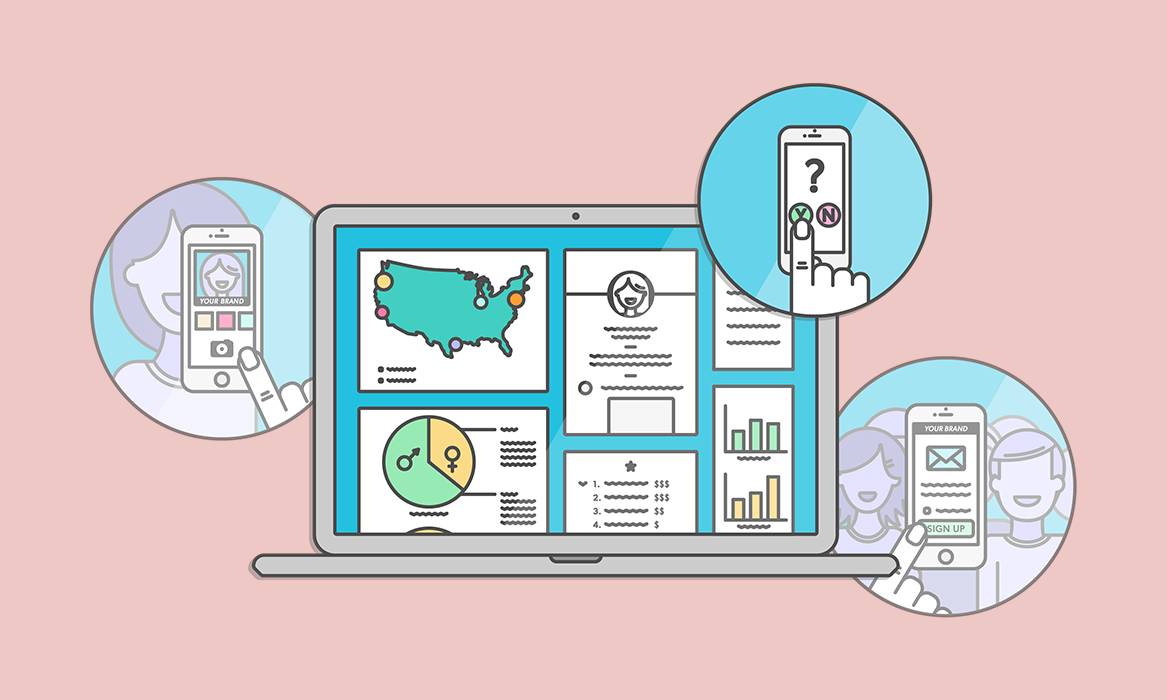
Initially the project started out of a larger profile discovery sprint where the design team began to re-envision the dating experience starting with the profile. One of our ideas was to incorporate data to help guide people to the best possible profile, and improve their chances of making a connection. Out of those ideations, a dedicated data dashboard became its own discovery sprint lead by myself and my co-worker Liwei Yu.
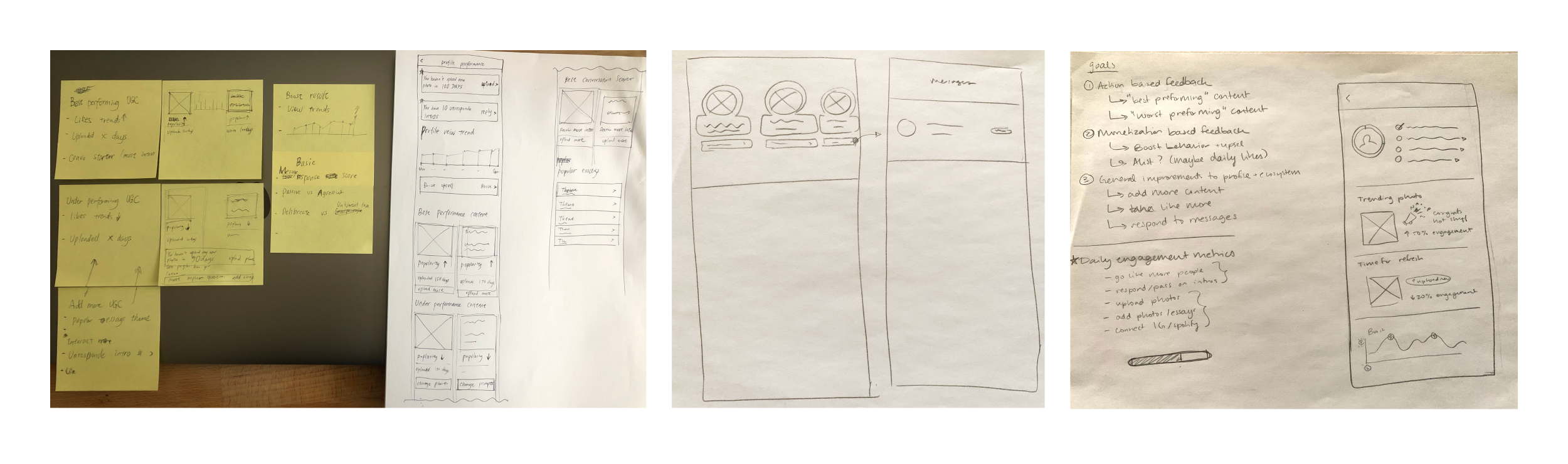
Low Fi Sketching and Ideation
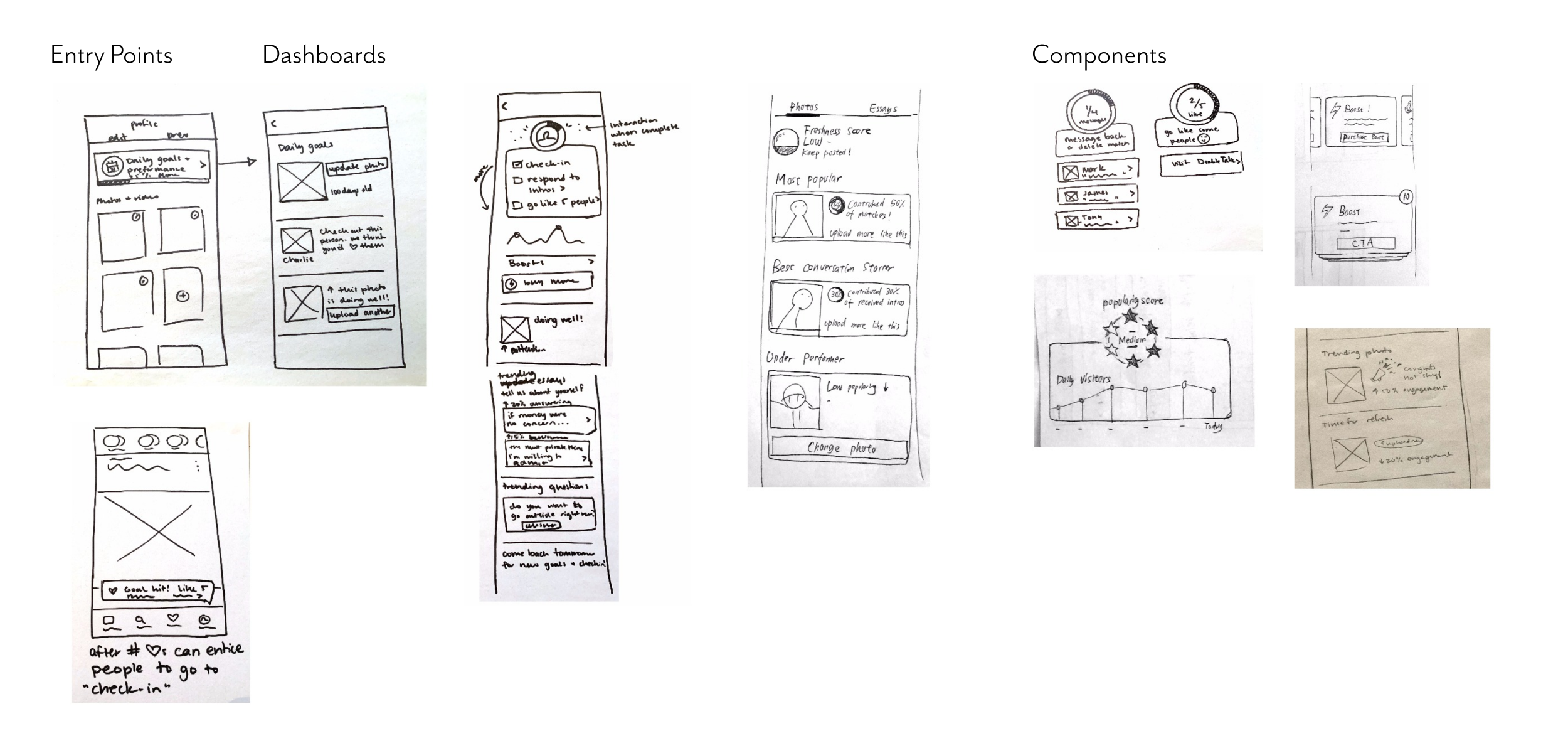
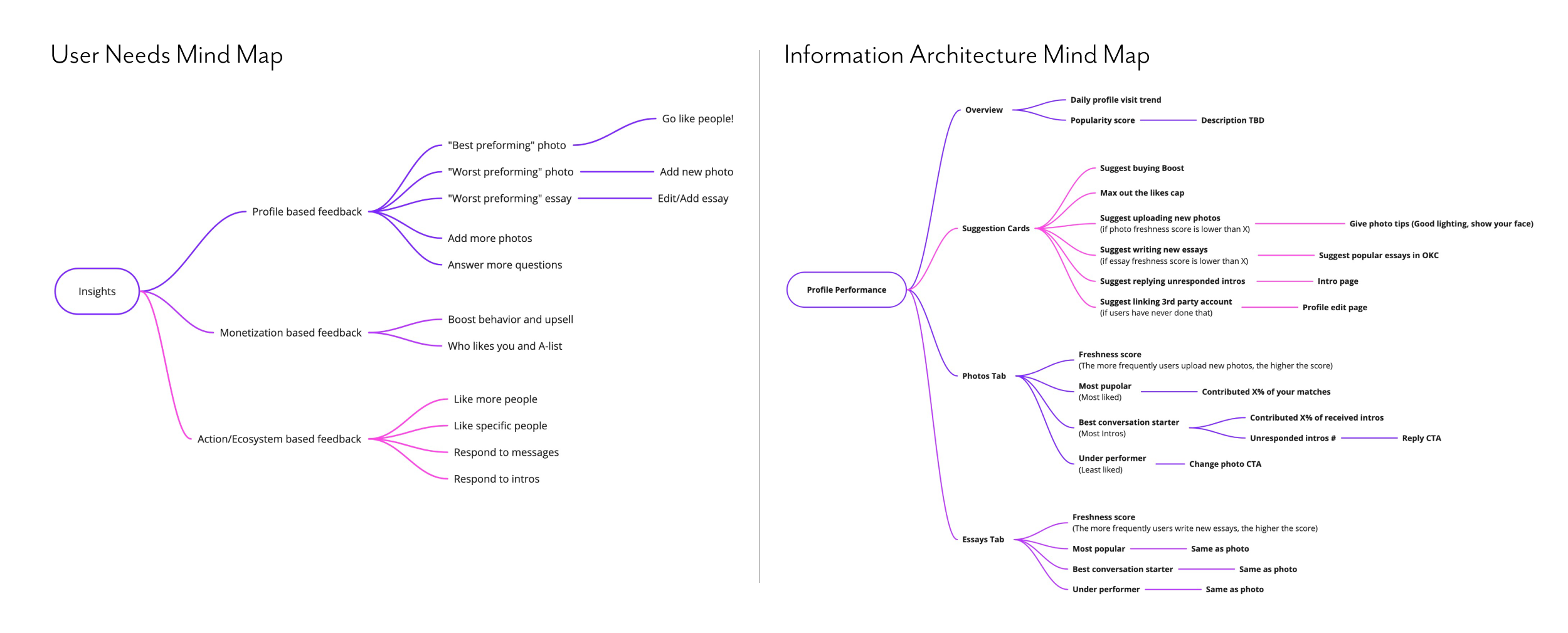
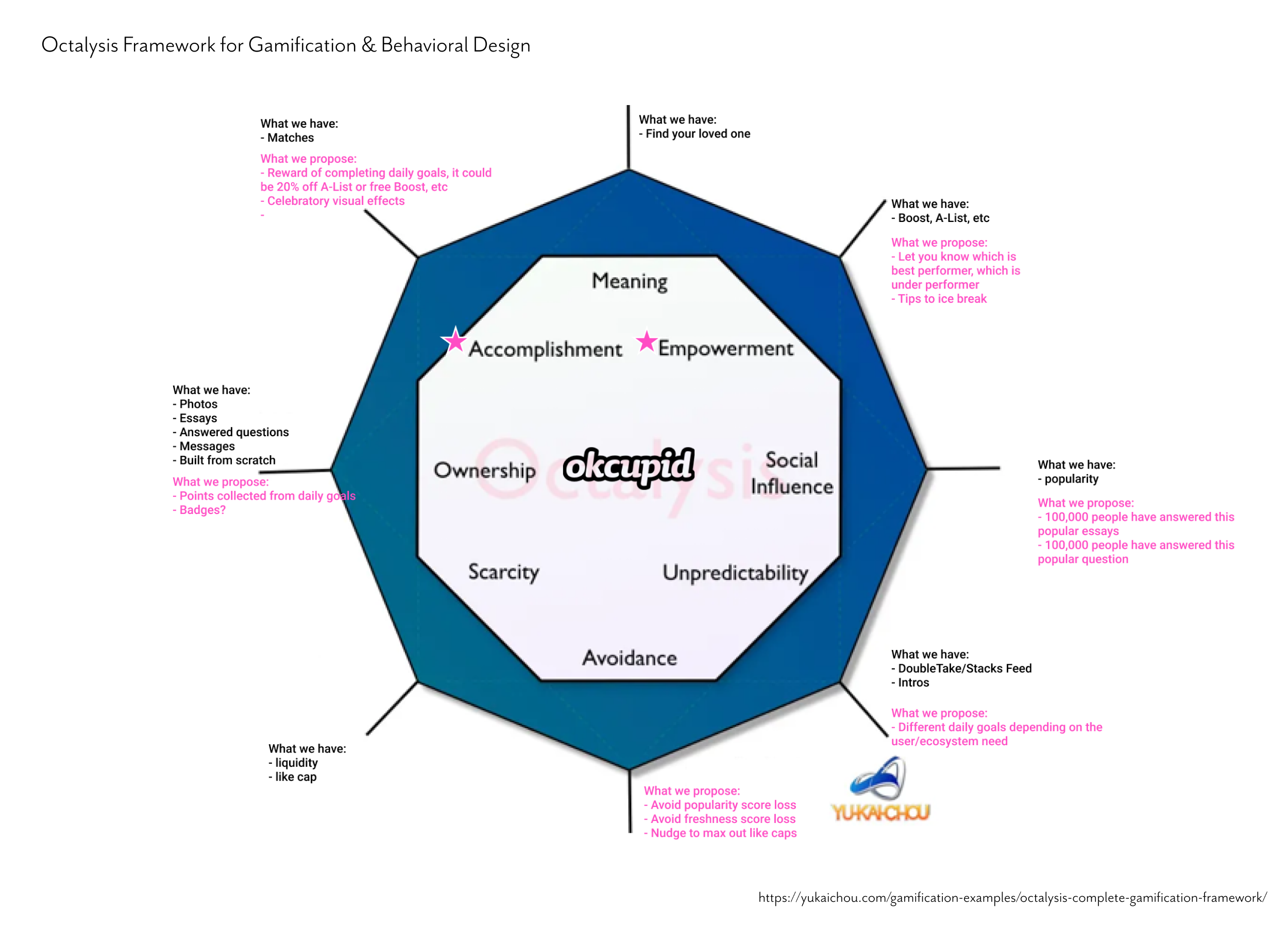
One of the great parts of the discovery track, is the freedom to envision a product without technical or historical restraints. However, at the end of the day the feature needs to be built, and must make sense for the user, the ecosystem, and the business. Taking cues from the gaming industry, we applied the Octalysis Framework to how we currently do and how we might encourage various user behaviors.
Competitor Research
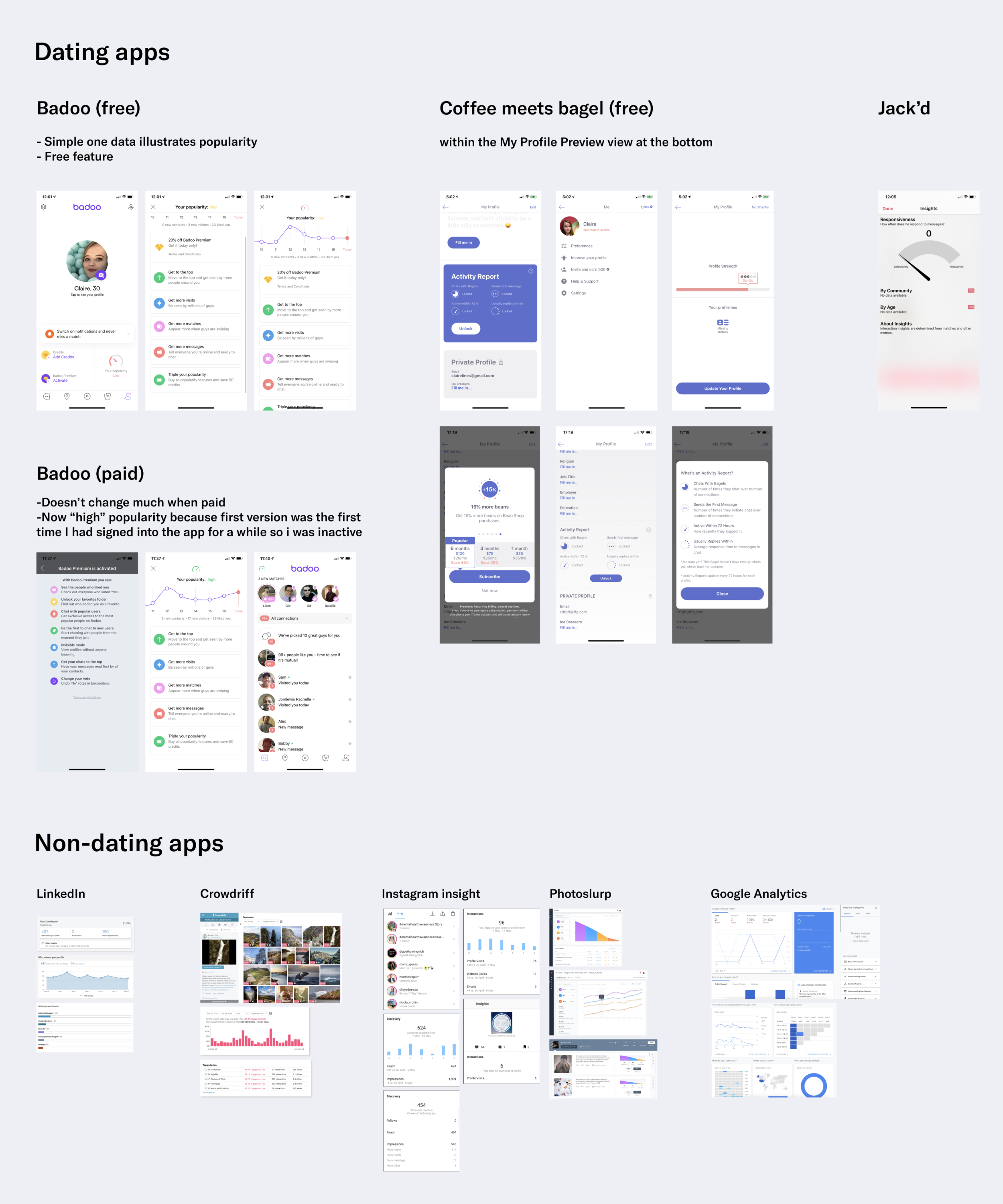
At this stage, we had a few good starting points for a data dashboard, but we wanted to see what existed already from both direct and indirect competitors.
Black and White Fidelity
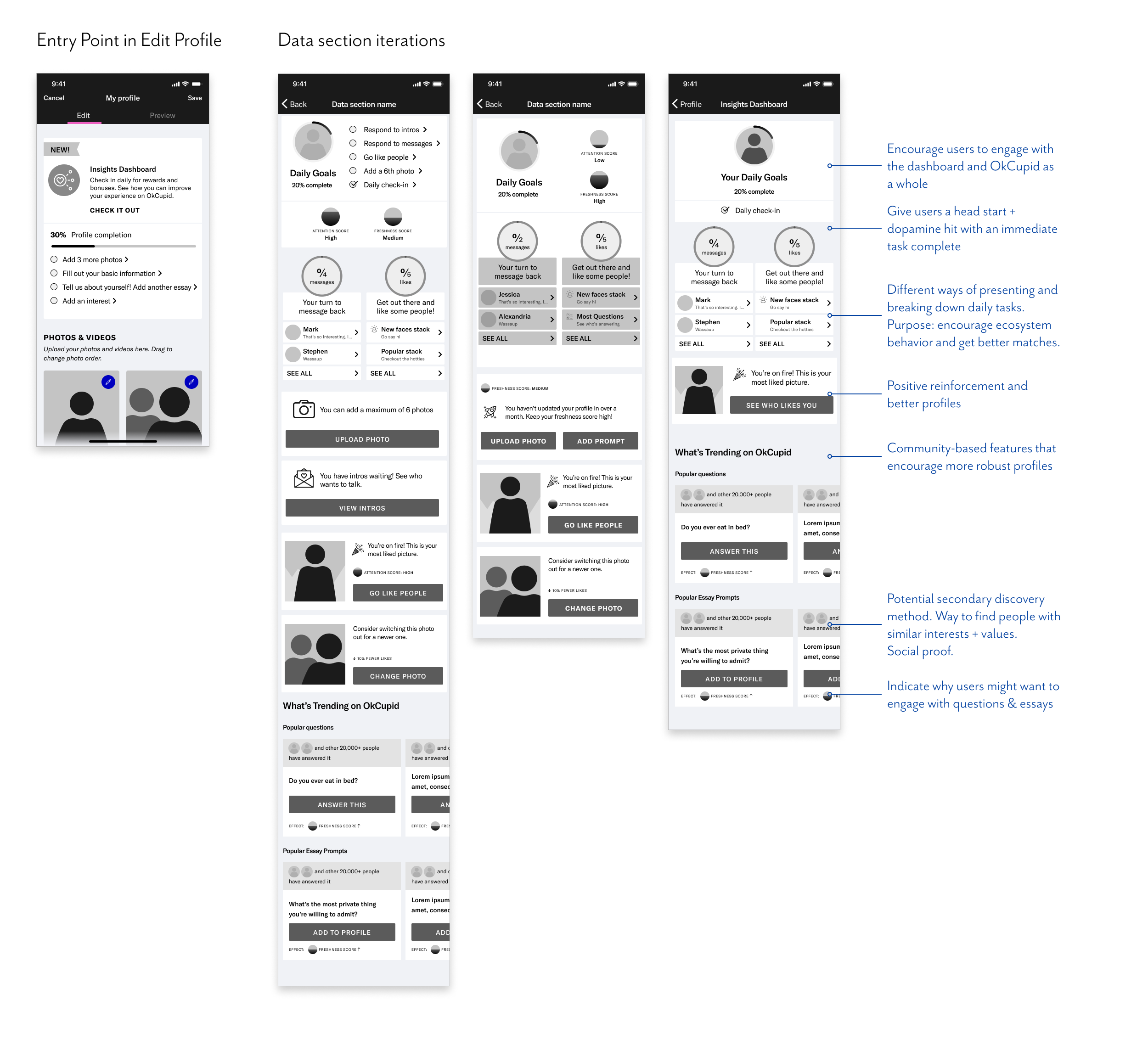
Working in Figma, Liwei and I worked to translate the sketches we thought had merit into simple black and white, blocked out UI/UX iterations.
Visual Refinement
Once we’ve honed in on some concepts and layouts we thought worked in black and white, we add visual design and apply our style guide. In addition to applying visual finesse, we’ll also begin considering where and how this feature will fit into the broader product. I also came up with the name IQupid after brainstorming with the PMs and other designers.
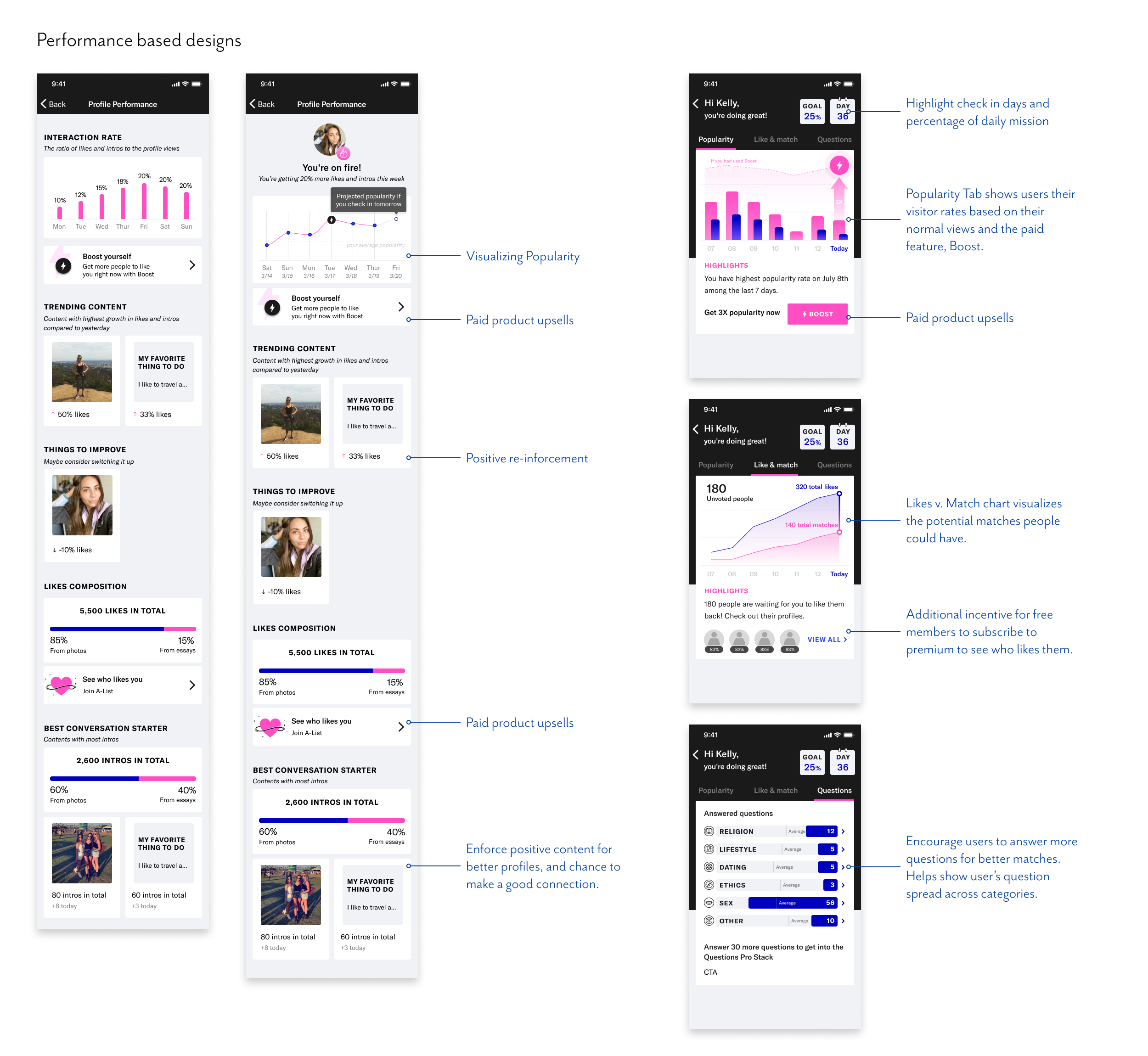
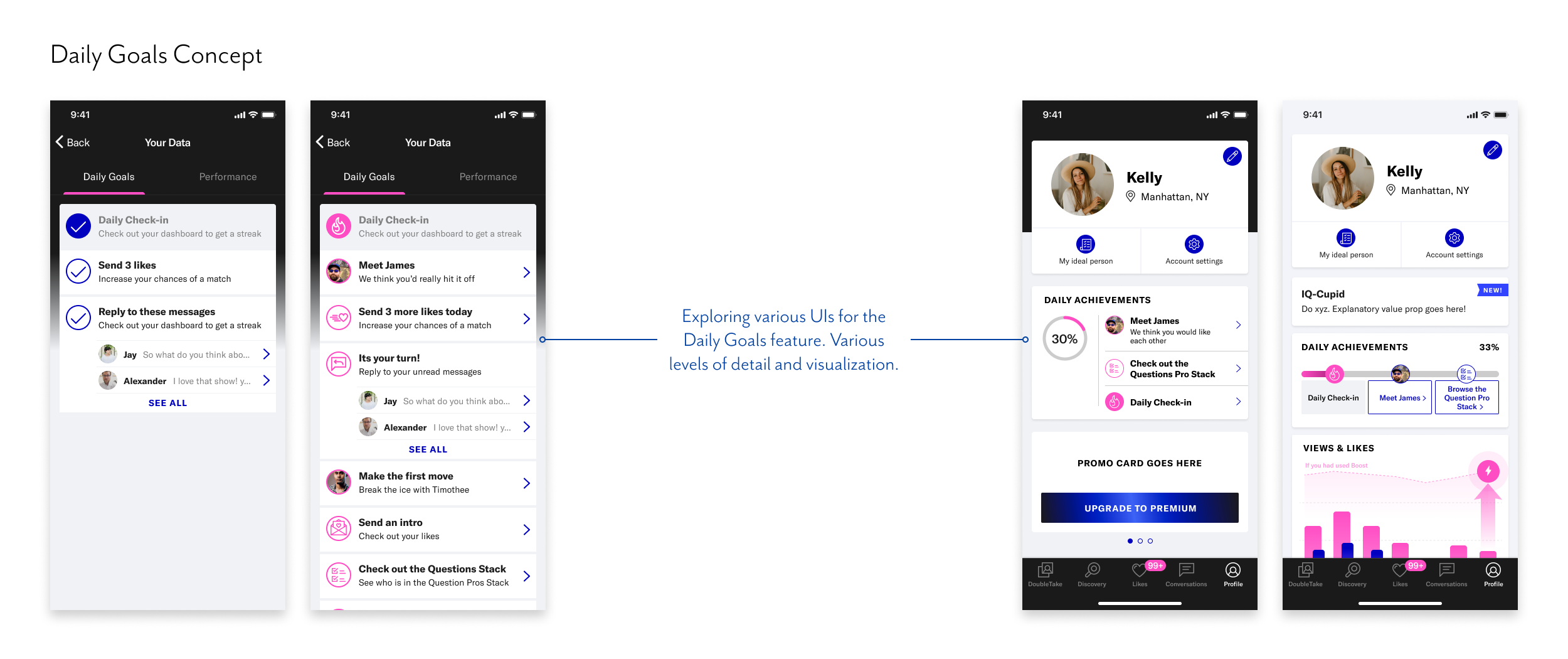
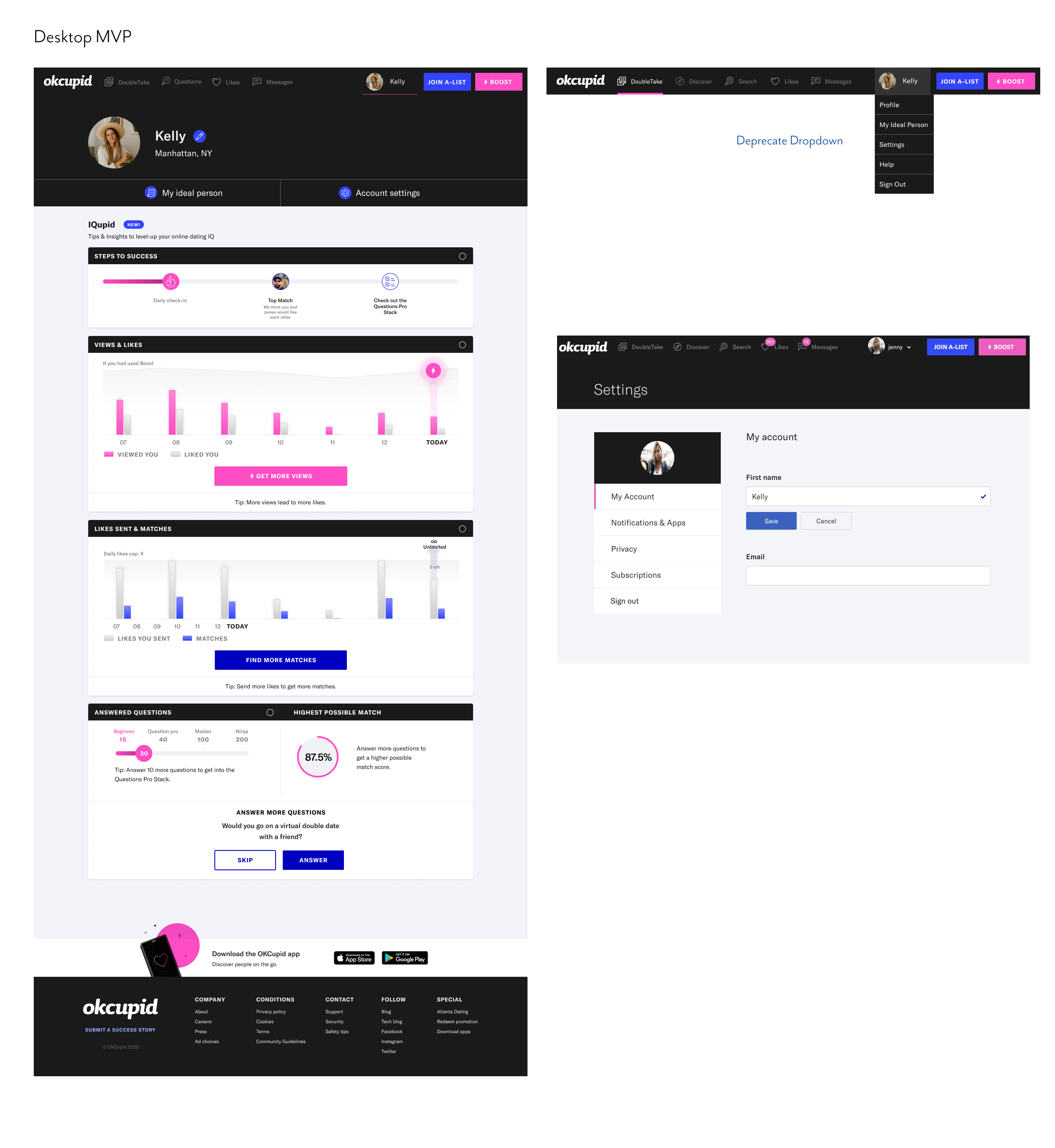
This is also where development and technical considerations inform the design. While we could do a great many things with our data dashboard, but talking to developers and stakeholders ensure we are designing and testing a realistic version of the feature.
Prototype and Testing
At this point, we wanted to validate our MVP with unmoderated testing through Usertesting.com. We used Figma to run 14 unmoderated interviews with dating app users in Western markets to understand their reactions to the new profile tab layout and each module of the IQupid dashboard.
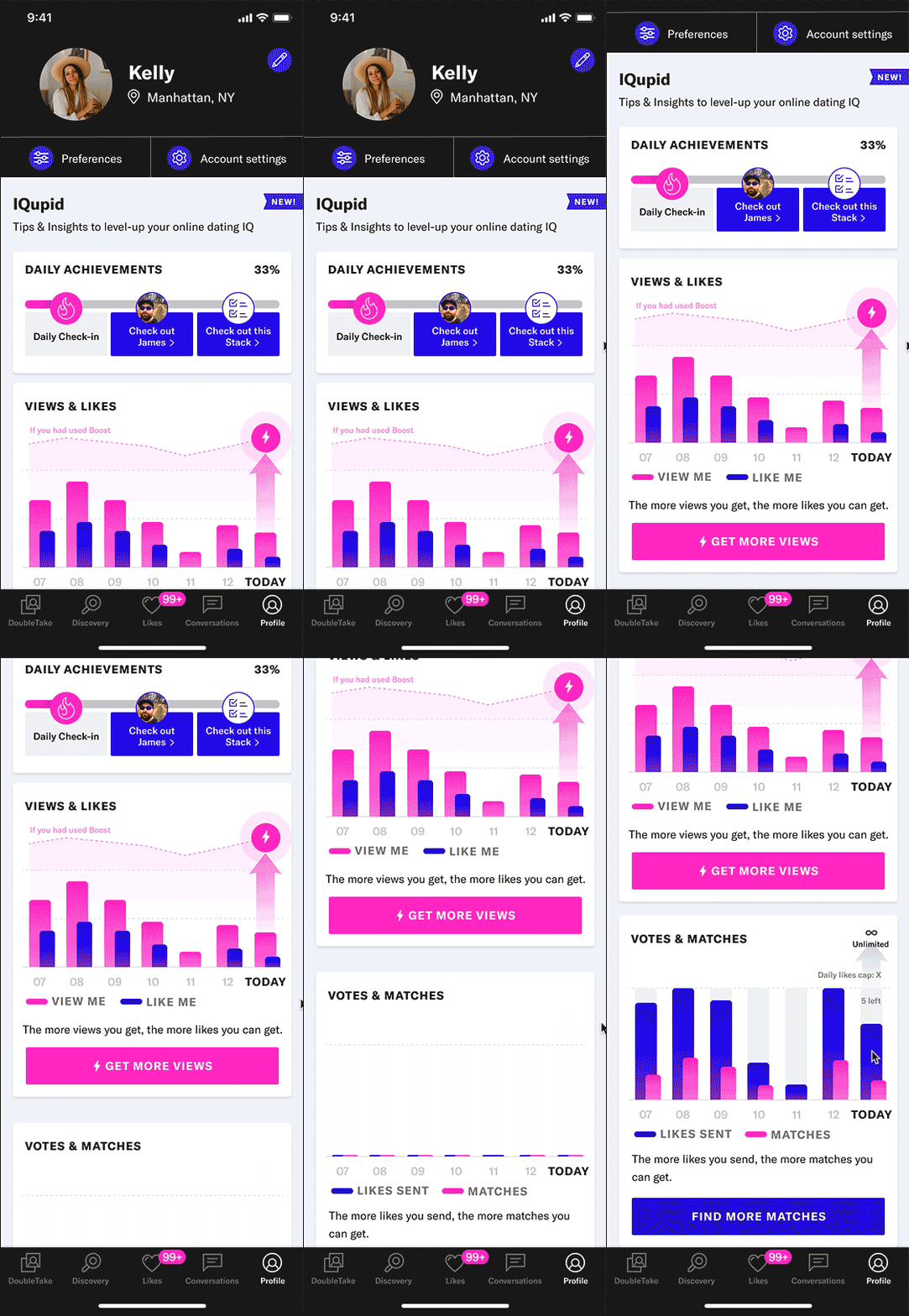
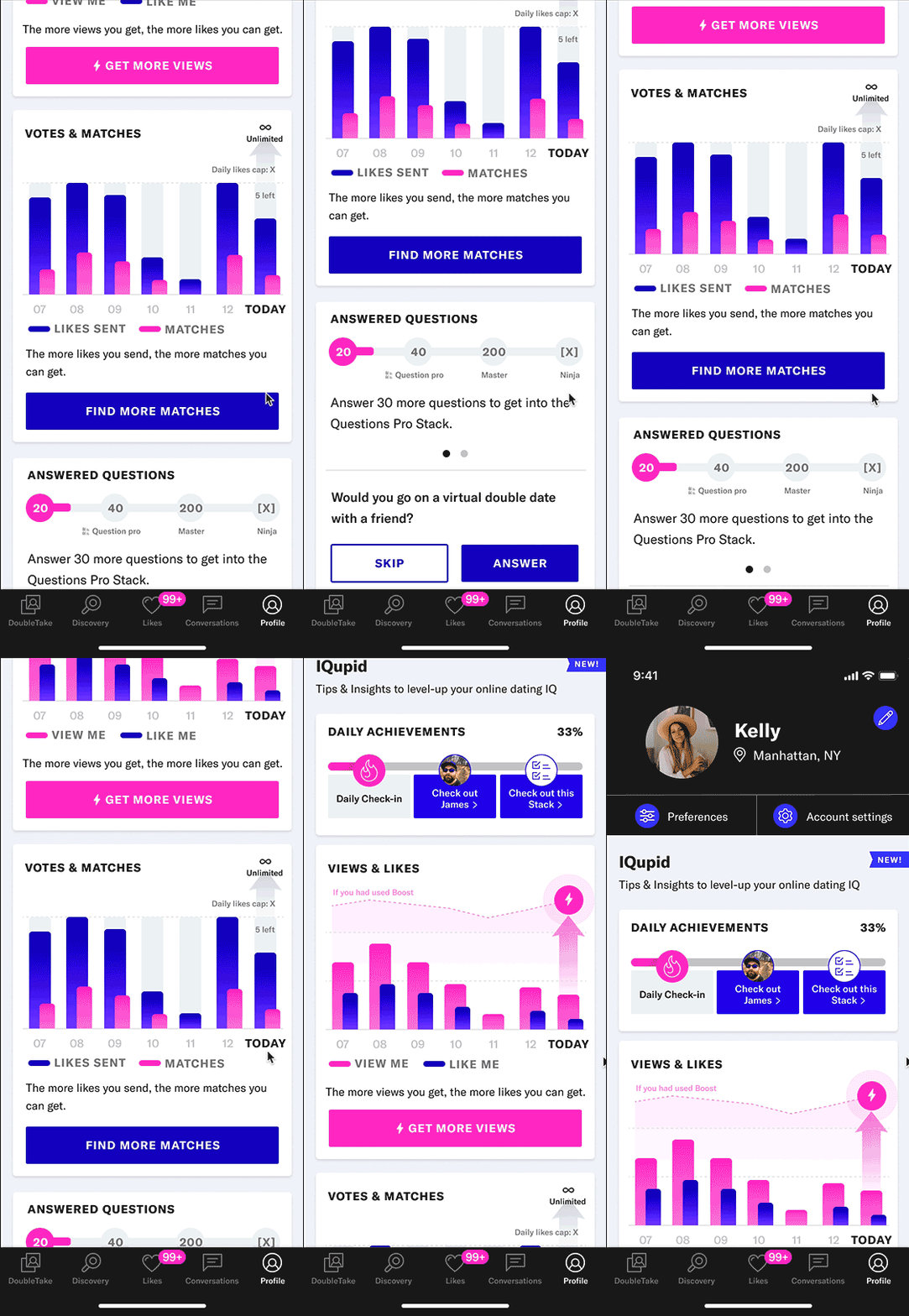
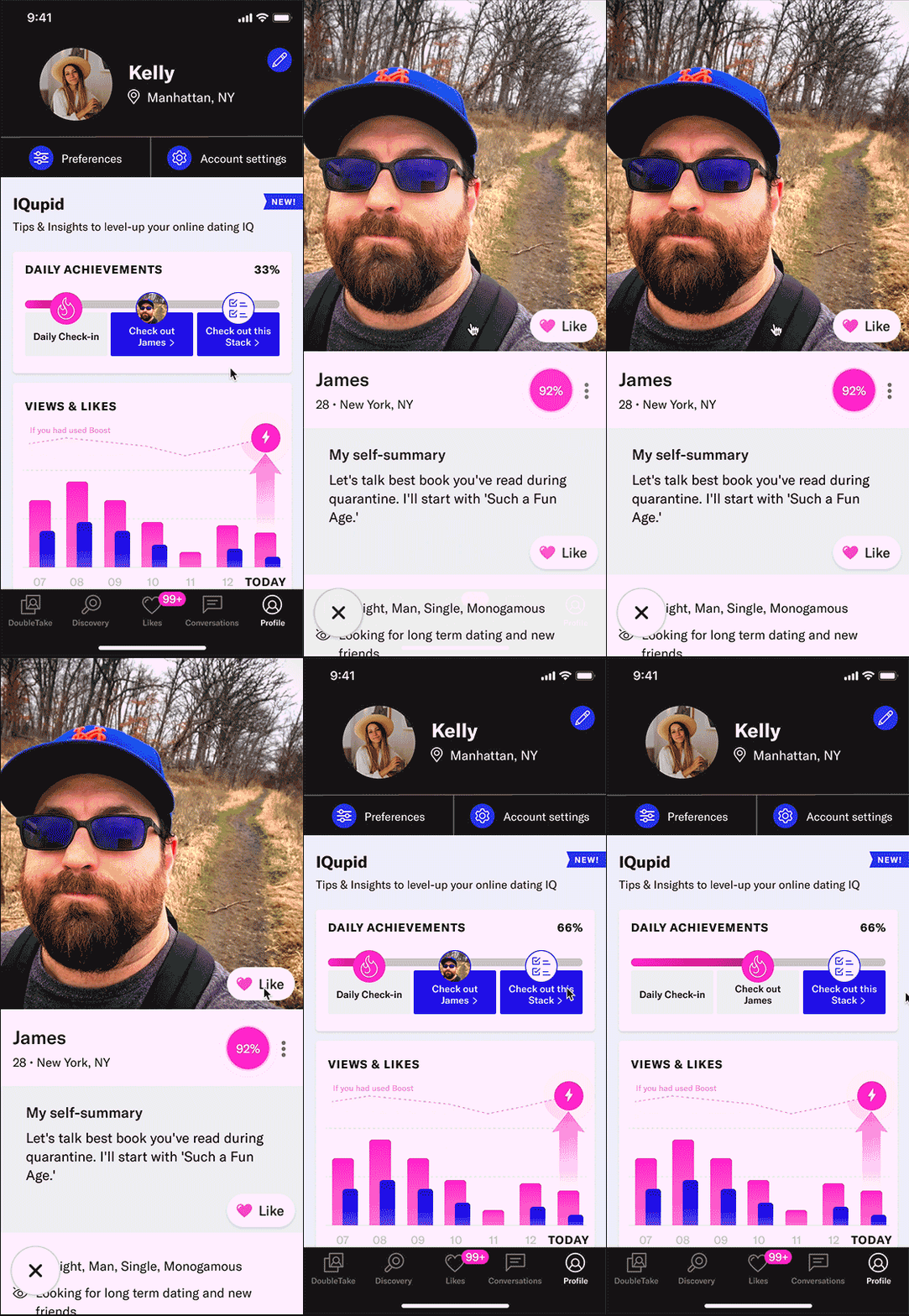
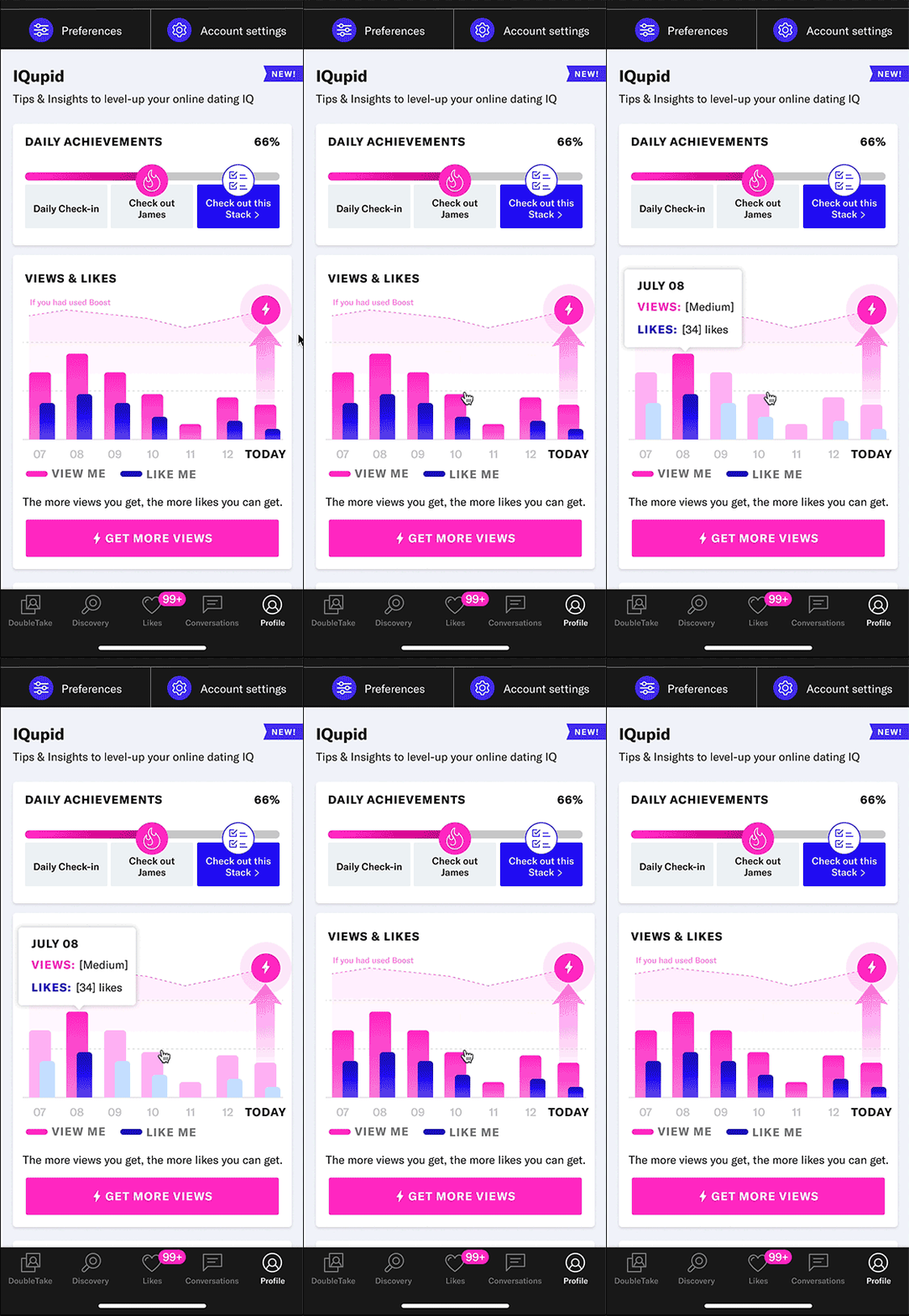
Ultimately, people liked the idea of having an analytics-like dashboard to help inform their progress on a dating app. It seemed unique, and they didn’t have any issues accessing other parts of their profile or settings.
However, people did notice that some of the modules were pushing users towards monetized features and were skeptical of that. They also expressed concerns that visualizing their likes and matches could be demoralizing. As a result, we decided to shift focus towards the Daily Achievements (later becoming Steps to Success) and Questions modules.
Moving to development
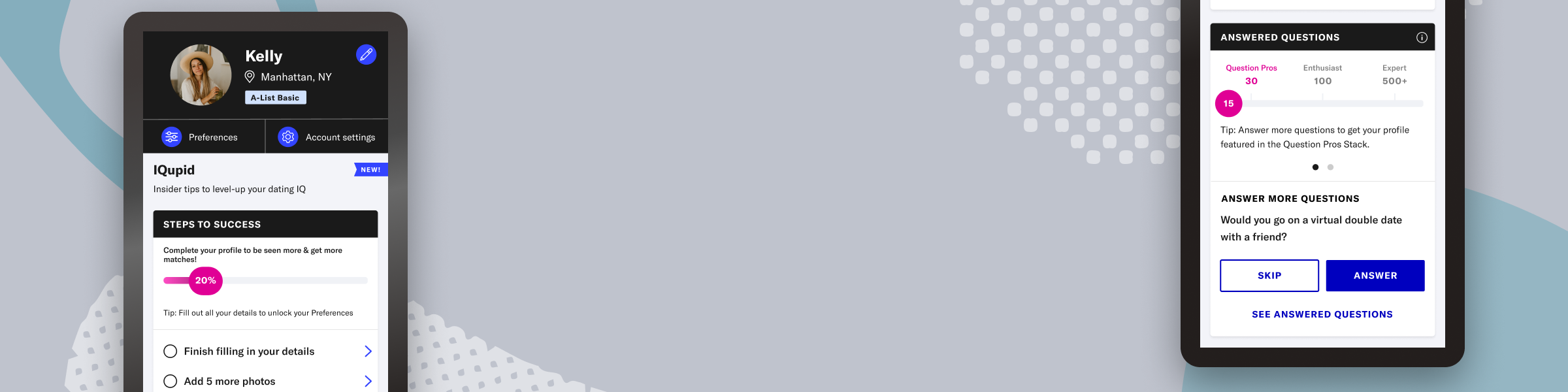
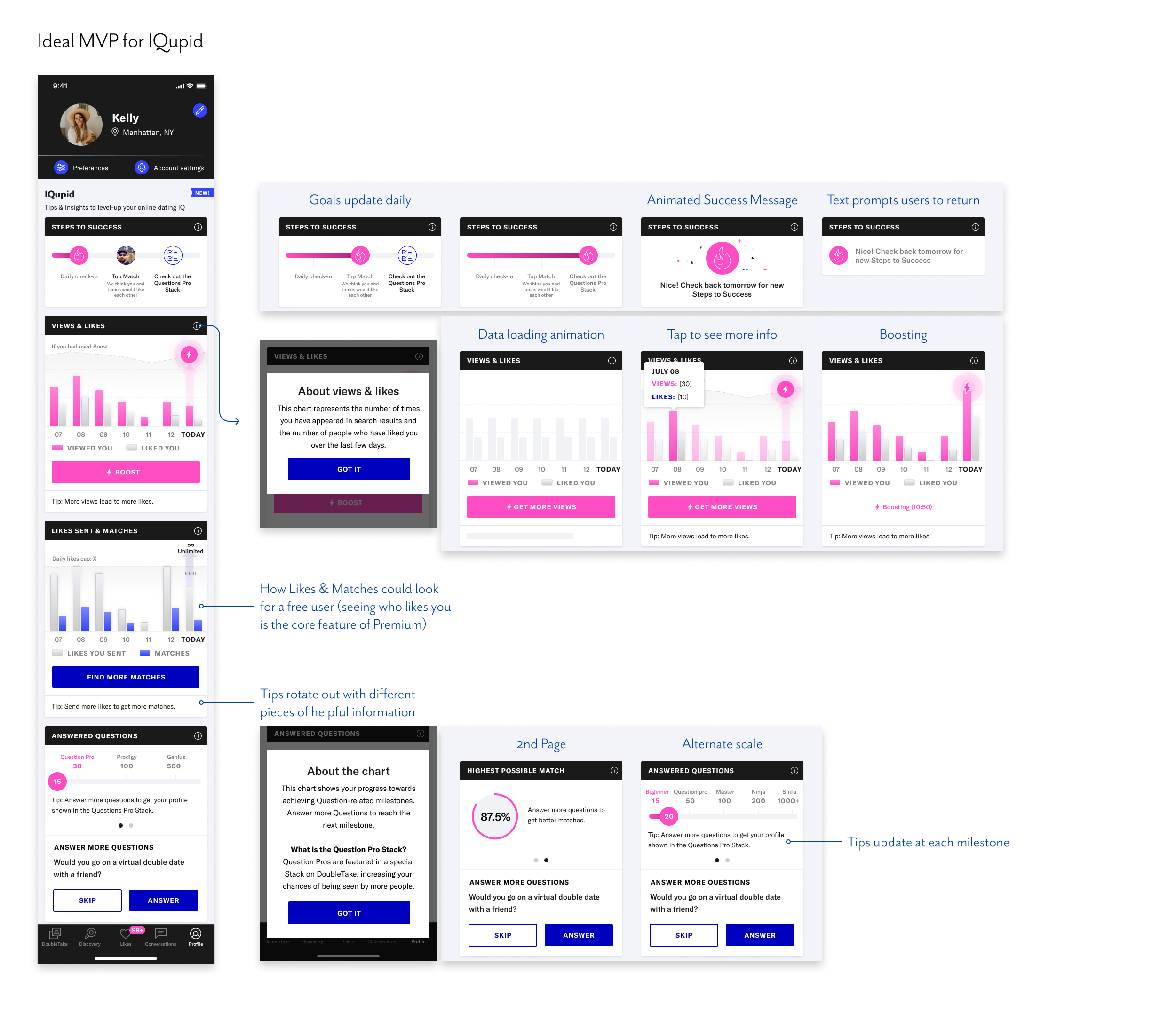
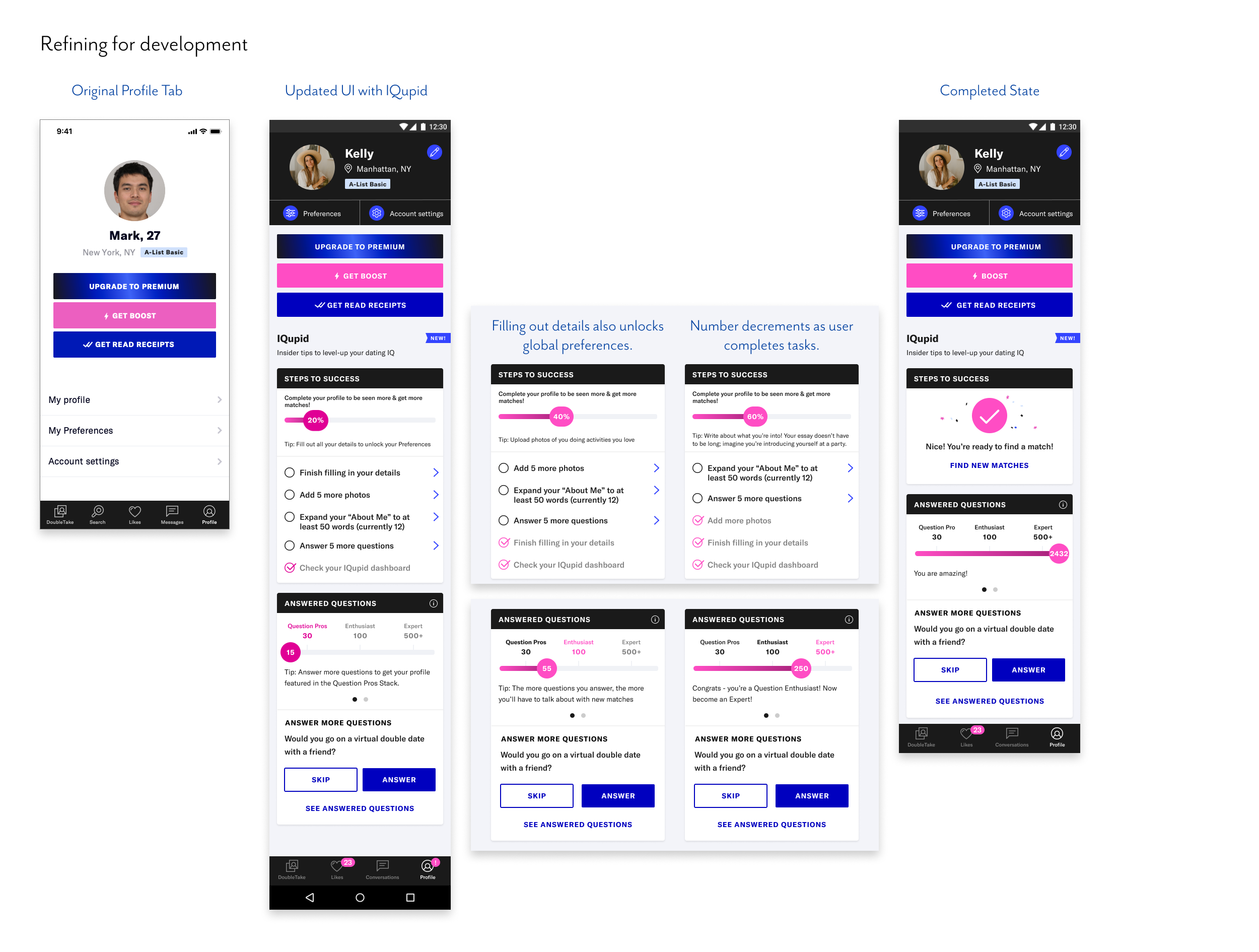
After validating our concept with qualitative testing, and reviewing with stakeholders, I worked with the PM, developers, and data analyst in our pod to build out IQupid in the profile tab. The original profile tab was very basic with a lot of opportunity for improvement. At the time, our pod was the Presentation and Extraction team, so we were responsible for extracting information from the user and presenting it back to other eligible daters. With this in mind, we decided to build out two main modules. The first is Steps to Success, which focuses on getting users to complete the good, basic foundation of a profile. We also refined the questions module. Although questions are a core OkCupid feature, it was previously hidden at the bottom of the edit profile page. Because we chose to use modules, this feature is infinitely expandable in the future. Lastly, we incentivized users to complete their Steps to Success by giving them a free Boost upon completion. This also ensures users with good profiles are more visible.
Conclusion
Ultimately, after launching the feature in October 2020, we saw a rise of 25% in Boosts (which makes sense since we gave that away for free). Likes in Discovery and essays added went up 4%. Photos uploaded also rose by 11%, which is great because, historically, getting people to add photos is a struggle. Today, IQupid is launched globally and serves as an important step in a new dater’s journey.